

XinJiang Train
Itinerary

Train Route Map


Flight Reference

Train Route Map


Flight Reference
Taoyuan✈Zhengzhou✈Urumqi
DAY
1
.png)
Ürümqi
Urumqi, meaning "beautiful pasture," is Xinjiang’s capital, a Silk Road hub, and a cultural melting pot of Uygur, Han, Hui, Kazakh, and other ethnic groups.
*Depart from Taoyuan International Airport with a connecting flight in Zhengzhou, arriving in Ürümqi. Transfer to the hotel upon arrival.
Dinner/
In-flight Meal
Lunch/
In-flight Meal
Breakfast/
X

Grand Mercure Urumqi Hualing Hotel or similar

Ürümqi – Xinjiang Ancient Ecological Park – Xinjiang Uygur Autonomous Region Museum – Welcome Banquet
DAY
2
.png)
Xinjiang Ancient Ecological Park
Xinjiang Ancient Ecology Park, home to China’s largest Akhal-Teke horse base, petrified woods, poplar relics, and meteorites, blends natural wonders with Silk Road heritage.

Xinjiang Uygur Autonomous Region Museum
A premier Xinjiang museum featuring the Loulan Beauty mummy, Han-dynasty brocade, and Silk Road relics.
Dinner /
Welcome Banquet
Lunch /
Hui Ethnic Banquet
Breakfast /
Hotel Breakfast
Grand Mercure Urumqi Hualing Hotel or similar
Ürümqi - Turpan - Grape Valley - Karez Well Paradise - Turpan - (1,387 km) - Hotan
DAY
3
.png)
Turpan
An ancient Silk Road hub, historically Gaochang, Xizhou, and Huozhou, located on the Tianshan foothills, serving as a key trade point and center of Han Chinese influence in Central Asia.
.png)
Karez Well Paradise
This 2,000-year-old underground irrigation system turned desert into oasis, with original shafts and tunnels showcasing a silent engineering marvel that shaped Silk Road history.

Karez Well Paradise
This 2,000-year-old underground irrigation system turned desert into oasis, with original shafts and tunnels showcasing a silent engineering marvel that shaped Silk Road history.
Dinner /
Turpan Local Cuisine Experience
Lunch /
Turpan Harenbag Restaurant
Breakfast /
Hotel Breakfast
Train Cabin (2 guests per compartment)
Hotan - Tuancheng Fortress - Yotkan Ancient City - Hotan - (554km) - Kashgar
DAY
4

Hotan
Hotan, a historic Silk Road hub, was famed for its prosperity and the "Three Treasures": Hotan Jade, Carpets, and Silk, symbols of its rich culture and trade.

Tuancheng Fortress
This historic city-center neighborhood, known as "Round City" for its circular layout, showcases Uyghur architecture and culture and remains a vibrant testament to southern Xinjiang’s ethnic heritage.

Yotkan Ancient City
Located 10 km west of Hotan, this site combines food streets, boutique hotels, workshops, and exhibitions to recreate ancient Khotan’s Silk Road bustle through culture and technology.
Tuancheng Fortress
This historic city-center neighborhood, known as "Round City" for its circular layout, showcases Uyghur architecture and culture and remains a vibrant testament to southern Xinjiang’s ethnic heritage.

Dinner /
Hotan Speciality
Lunch /
Local Cuisine
Breakfast / Xinjiang Breakfast
Train Cabin (2 guests per compartment)
Ürümqi – Kashgar Old Town Opening Ceremony – East-West City Electric Cart Tour – Id Kah Mosque – Kashgar Supermarket
DAY
5

Kashgar
Sitting where several Silk Road routes meet, was once a major trade crossroads—so busy with merchants and culture that it became known as the
“Kingdom of Bazaars.”
.jpg)
Kashgar Old Town
Lay at the western end of multiple Silk Road routes, thriving for centuries as the Kingdom of Bazaars—a trading and cultural hub where East and West met.”
.jpg)
Id Kah Mosque
In Kashgar is Xinjiang’s largest, drawing 2,000–3,000 daily worshippers. During major festivals like Eid al-Adha, tens of thousands gather for all-night celebrations.
.jpg)
Kashgar Supermarket
Offering a wide range of Xinjiang specialties and Kashgar local products—from dried fruits, fragrant teas, and nuts to traditional snacks and gift items—all affordably priced and conveniently available.
Kashgar Supermarket
Offering a wide range of Xinjiang specialties and Kashgar local products—from dried fruits, fragrant teas, and nuts to traditional snacks and gift items—all affordably priced and conveniently available.

Dinner/
Kashgar dining
Lunch:/
X
Breakfast/ Xinjiang-style breakfast
Hampton by Hilton Kashgar or similar
Kashgar → Gao Tai Residential Area → Fragrant Concubine Garden → Kashgar → Kuqa (786 km)
DAY
6

Gao Tai Residential Area
A 600-year-old Uyghur neighborhood in Kashgar’s Old City, built on a loess cliff, featuring earth-timber and brick-timber houses that showcase minority lifestyles and architecture.

Fragrant Concubine Garden
Fragrant Concubine Garden blends ethnic and modern architecture, showcasing Xiangfei’s life from her Kashgar origins to her honored years in Beijing.
Fragrant Concubine Garden
Fragrant Concubine Garden blends ethnic and modern architecture, showcasing Xiangfei’s life from her Kashgar origins to her honored years in Beijing.

Fragrant Concubine Garden
Fragrant Concubine Garden blends ethnic and modern architecture, showcasing Xiangfei’s life from her Kashgar origins to her honored years in Beijing.

Dinner /
Lamb Meat
Lunch /
Local Xinjiang Cuisine
Breakfast / Xinjiang-style Breakfast
Train Cabin (2 guests per compartment)
Kuqa → Tianshan Mysterious Grand Canyon → Kuqa Palace → Kuqa → (330km) → Korla → Korla Hotel
DAY
7

Kuqa
Kucha, nestled between the Tianshan Mountains and Tarim Basin, was a key Silk Road hub since the Han and Tang dynasties, renowned for its culture, music, and arts.
Dinner / Chinese Cuisine
Lunch /
Grand Canyon Restaurant
Breakfast / Xinjiang-style Breakfast
Korla Pear City Garden Hotel or similar
Korla → Museum of Bayinguoleng Mongol Autonomous Prefecture (Luoburen Village) → Bosten Lake → Korla → (561km) → Kuitun
DAY
8
.png)
Korla
At the Tianshan foothills and Tarim Basin edge, was an important Silk Road passage and is now a southern Xinjiang transport hub, famed for its Korla pears—earning the nickname "Pear City."

Museum of Bayinguoleng Mongol Autonomous Prefecture
Home to over 10,000 relics—including 561 prized artifacts—the museum features galleries on Bayingolin history, the Silk Road Loulan, and Dongri achievements, with architecture inspired by Great Wall beacon towers and Mongolian Buddhist stupas.

Luoburen Village
Once a Lop people settlement, the site now offers cultural tourism with traditional architecture, set amid desert, the Tarim River, and poplar forests.

Boston Lake
Xinjiang’s largest freshwater lake, features reed beds, sandy beaches, and peaceful fishing villages, blending natural beauty with cultural charm.
Dinner / Fish Banquet
Lunch / Yuli Grilled Lamb Chops
Breakfast / Hotel Breakfast
Train Cabin (2 guests per compartment)
Kuitun → Northern Section of Duku Highway (switch to van) → Nalati Grassland → Xinyuan
DAY
9
.png)
Kuitun
Named after the "cold" Kuitun River, has been pastoral land since the Han and Tang dynasties and now serves as a key transportation, telecom, and energy hub in Xinjiang.
.png)
Duku Highway
(Northern Section)
Stretching 561 km from Dushanzi to the ancient Kucha Kingdom, this Tianshan route is praised as a "Scenic Boulevard" for its dramatic landscapes.
.png)
Nalati Grassland
Renowned for its rolling hills, forests, snow-capped peaks, and alpine meadows, Nalati Grassland—named one of "China's Six Most Beautiful Grasslands"—is ideal for photography and steppe ecotourism.
Travel Advisory: Duku Highway
Operating period: Mid-June to September (weather permitting).
Vehicle access restricted to passenger cars (≤7 seats).
**Alternative routes will be arranged if closures occur. Thank you for your understanding.
Dinner / Traditional Kazakh Cuisine
Lunch /
Authentic Xinjiang Cuisine
Breakfast /
Local Xinjiang Breakfast
Xinyuan Nalati International Hotel or similar
Xinyuan → Kazakh Folk Village → Sayram Lake → Bole
DAY
10

Kazakh Folk Village
This Ili tourism area showcases Uyghur folk culture, offering an immersive experience of Xinjiang’s traditions, local life, and culture. A National 4A-Class Tourist Attraction, it serves as Yining’s cultural flagship.

Sayram Lake
This Ili tourism area highlights Uyghur folk culture, offering an immersive experience of Xinjiang’s traditions, local life, and culture through dining, sightseeing, shopping, and entertainment. It is a National 4A-Class Tourist Attraction and a cultural flagship of Yining.
This Ili tourism area showcases Uyghur folk culture, offering an immersive experience of Xinjiang’s traditions, local life, and culture. A National 4A-Class Tourist Attraction, it serves as Yining’s cultural flagship.
Sayram Lake

Dinner /
Xinjiang Local Cuisine
Lunch /
Xinjiang Local Cuisine
Breakfast /
Hotel Breakfast
Chalsili Hotel Bole or similar
Bole → Guai Shiyu (Bizarre Stone Valley) → Hot Spring Bathing → Bole → (734km) → Beitun
DAY
11

Bole
A historic multi-ethnic city with dramatic landscapes, holds five national titles and serves as a key western Chinese hub in the Belt and Road Initiative.

Guai Shiyu
Is a scenic area renowned locally for its peculiar rock formations. It features extensive and uniquely shaped rocky landscapes that stand strikingly across the vast grasslands, creating a mesmerizing sight.

Wenquan County Hot Springs
Famed for its hundreds of natural hot springs across mountains, grasslands, and wetlands, Wenquan—once used by locals—is now a growing wellness and geothermal tourism hub with luxury hotels and public baths.
Dinner /
Big Plate Chicken (Dapanji)
Lunch/
Xinjiang local cuisine
Breakfast /
Local Xinjiang Breakfast
Train Cabin (2 guests per compartment)
Beitun → Kanas Nature Reserve → Jiadengyu (Base Camp)
DAY
12
Dinner/ Traditional Kazakh Cuisine
Lunch/
Tuvan Cuisine
Breakfast/
Local Xinjiang Breakfast
.png)
Beitun
A city in northern Xinjiang, China, celebrated for its strategic location, natural resources, and unique blend of ecological beauty and military reclamation heritage. A distinctive frontier destination.

Kanas Nature Reserve
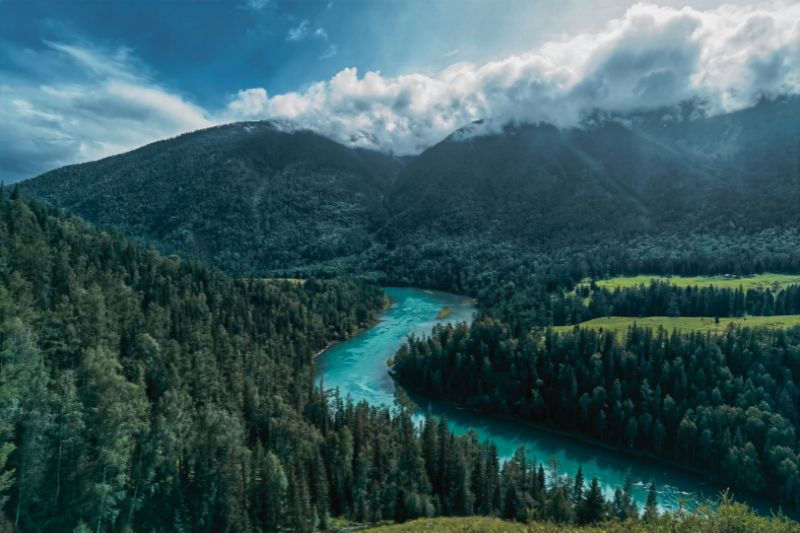
Kanas Lake—Mongolian for ‘beautiful, rich, and mysterious’—shimmers with changing hues through the seasons. Wander its famed Dragon, Moon, and Fairy Bays for a truly magical view.
Contact Us

Heavenly Lake of Tianshan
A glacial lake at 1,910m elevation, revered in Chinese mythology as the bathing site of the Queen Mother of the West. Its waters reflect Bogda Peak, surrounded by spruce forests and diverse ecosystems. Designated a National Geopark (2013) for its geological and cultural significance.
Hongfu Lake Kanas Resort
Jiadengyu - Hemu - Wucaitan - Beitun - (662km) - Ürümqi
DAY
13
Day 1
Taoyuan✈Zhengzhou✈Urumqi
Ürümqi
the capital of China's Xinjiang Uygur Autonomous Region, means "beautiful pasture."
It is the world's most inland major city and a key hub on the ancient Silk Road.
Home to Uygur, Han, Hui, Kazakh, and other ethnic groups,
it is known for its unique blend of cultures and history.
*Depart from Taoyuan International Airport with a connecting flight in Zhengzhou, arriving in Ürümqi. Transfer to the hotel upon arrival.

Lunch/ In-flight Meal
Dinner/ In-flight Meal
.png)
Grand Mercure Urumqi Hualing Hotel or similar
Day 2
Ürümqi – Xinjiang Ancient Ecological Park (Blood-Sweating Horse Base) – Xinjiang Uygur Autonomous Region Museum – Welcome Banquet
Xinjiang Ancient Ecological Park
Home to the world's largest Akhal-Teke horse base with daily shows, China’s largest petrified wood forest, ancient poplar displays, and meteorites.
Features cultural artifacts like stone statues, deer stones, and petroglyphs—showcasing Xinjiang’s natural and historical heritage in one immersive destination.
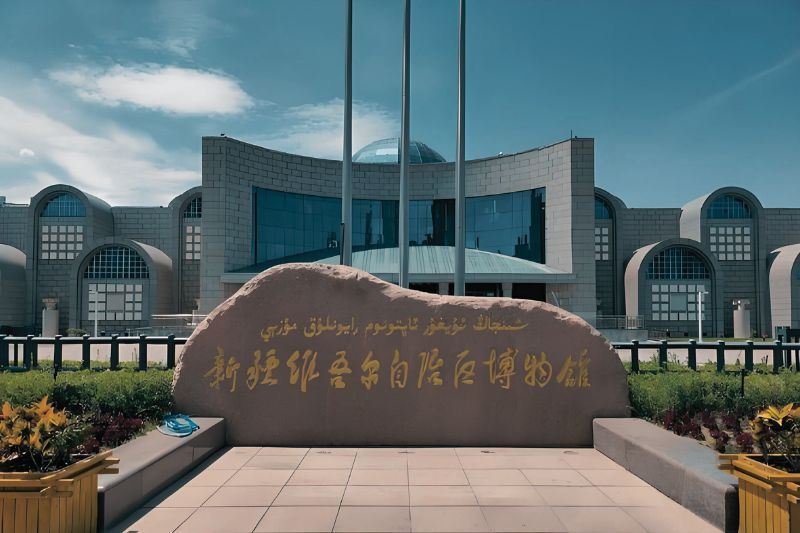
Xinjiang Uygur Autonomous Region Museum
A leading institution exhibiting the region's history and ethnic cultures, featuring rare artifacts including the ancient "Loulan Beauty" mummy and the Han Dynasty "Five Stars Rise in the East" brocade.
Offers scholarly insight into Xinjiang's unique heritage.
Breakfast / Hotel Breakfast
Lunch / Chinese cuisine
Dinner / Welcome Banquet
Grand Mercure Urumqi Hualing Hotel or similar
Day 3
Ürümqi - Turpan - Karez Well Paradise - Turpan - (1,387 km) - Hotan
.png)
Turpan
An ancient Silk Road hub and Han-era settlement, historically known as Gaochang, Xizhou, and Huozhou. Strategically positioned on the Tianshan Mountains' southern foothills, it served as both a key trade departure point and a enduring center of Han Chinese influence in Central Asia.
Karez Well Paradise
An underground irrigation system that transformed desert into oasis. Walk beside original well shafts and peer into untouched tunnels where cool air still whispers of its 2,000-year history. This is where engineering met survival, and water defied the desert.
A silent marvel that shaped Silk Road history.
Jiaohe Ruins
Perched on a plateau in the basin of Turpan Basin (Xinjiang, China), Jiaohe Ancient City is the world’s largest, oldest and best-preserved earthen-architecture city.
Founded around the 2nd century BC, it was once the capital of the ancient kingdom in the region and later thrived during successive dynasties, before being abandoned in the 14th century.
The city — shaped like a “willow-leaf” on a natural earthen island between two rivers — includes remains of residential areas, government offices, temples and streets, all carved directly into the earth; in 2014 it was added to the UNESCO World Heritage list.
Breakfast / Hotel Breakfast
Lunch / Xinjiang Cuisine
Dinner / Turpan Local Cuisine
Train Cabin (2 guests per compartment)
Day 4
Kuqa - Tianshan Mysterious Grand Canyon - Kuqa Old Town - Kuqa Alleyways - Kuqa Railway Station - Train to Kashgar

Kuqa
Kuqa sits on the northern edge of the Tarim Basin at the foot of the Tien Shan mountains. Once known as Qiuci, it was a major hub on the ancient Silk Road and a key cultural and commercial center in the region.
Today, the city preserves a wealth of historic sites, vivid ethnic heritage, and intangible cultural traditions — making it a living open‑air museum that links past to present.
Tianshan Mysterious Grand Canyon
In Uyghur, “Bokeziliya” (also spelled “Keziliya”) means “red cliff” — a fitting name for the $Tianshan Mysterious Grand Canyon, whose vast gorge is formed by towering, reddish‑brown cliffs. Bathed in sunlight, the canyon’s fiery-hued rock faces soar into the sky like flames, forming a breathtaking spectacle.
Kuqa Old Town
Kuqa Old Town is a nationally recognized historic city in Xinjiang, blending Central Chinese, European, and Western‑region architectural styles. Its unique Uyghur‑style buildings, winding lanes, and rich historical heritage make it a living testimony to centuries of Silk Road culture.
Qiuci Alleyways
Step into the living history of Kuqa at Qiuci Alley — a beautifully preserved old‑town maze where colourful doors, winding lanes and Uyghur tea‑house melodies bring Silk Road heritage to life.
Breakfast / Xinjiang Breakfast
Lunch / Grand Canyon Restaurant
Dinner / Xinjiang Cuisine
Train Cabin (2 guests per compartment)
Day 5
Kashgar - Ancient City Opening Ceremony - Kashgar Old City Sightseeing (East & West Old Town by electric cart) - Gaotai Ancient Village - Meet Kashgar (Immersive Performance)

Kashgar
Occupies a unique geographic position — it was once a key hub on the ancient Silk Road, and is often described as “the city farthest from the sea yet closest to history.”
What makes Kashgar special is its strong blend of Uyghur and Central‑Asian culture: a maze‑like Old City, lively bazaars, distinctive architectural style, plus rich cuisine, music, and dance traditions.
.jpg)
Ancient City Opening Ceremony
The “opening ceremony” of Kashgar Old City is a grand welcome ritual held at the East Gate, combining historical‑figure reenactments, folk music, dance, and local cultural flair. The ceremony is performed twice daily — at 10:30 AM and 6:00 PM — and aims to greet travelers from all around, showcase Silk‑Road heritage, and lead visitors into the ancient city’s heart.
Kashgar Old Town
Stands at the heart of Kashgar and bears witness to the city’s long history. With over 2,000 years of heritage, the Old City condenses Kashgar’s past and present into a living tapestry.
Its maze of narrow alleyways and bustling bazaars highlight a living culture rooted in the Silk Road. Shops, tea houses, markets, and historic homes line the streets — making the Old City both a residential neighbourhood and a must‑visit destination for travellers seeking authentic local life.
※includes a ride through the Old City
by electric cart
.jpg)
Gaotai Ancient Village
Perched on an 800‑meter loess cliff at the northeast of the old city, Gaotai Ancient Village has stood for over 600 years.
Its maze of narrow, winding alleys, clustered earthen‑and‑wood homes, and age‑old layout offer a rare, living glimpse into traditional Uyghur architecture and everyday life in Kashgar.

Gaotai Ancient Village
Perched on an 800‑meter loess cliff at the northeast of the old city, Gaotai Ancient Village has stood for over 600 years.
Its maze of narrow, winding alleys, clustered earthen‑and‑wood homes, and age‑old layout offer a rare, living glimpse into traditional Uyghur architecture and everyday life in Kashgar.
Breakfast: Xinjiang-style breakfast
Lunch: X
Dinner: Xinjiang Cuisine
UrCove By Hyatt Kashgar Ancient City Scenic Area or similar
Day 6
Kashgar- Shache (Yarkand) - Twelve Muqam performance → Yarkand (Shache) King’s Mausoleum → Shache Old Town (Kasanqi)
Shache (Yarkand)
Shache County lies in Xinjiang’s Kashgar region — once a key hub on the ancient Silk Road and historically the kingdom of Shache.
Revered as the birthplace of the classic Uyghur musical tradition Twelve Muqam, it boasts a long history, rich cultural heritage, and many historic sites.
Today Shache remains a vibrant center where tradition lives on — blending history, culture, and Silk Road legacy in a unique Uyghur oasis.
Twelve Muqam performance
The Twelve Muqam is a grand classical music‑suite tradition of the Uyghur people, combining singing, instrumental music, dance, and storytelling.
With roots in the 16th century and strong influences from Silk Road cultural exchange, it is widely regarded as the “mother of Uyghur music.”
The Twelve Muqam was recognized by UNESCO as an Intangible Cultural Heritage — a living treasure that carries centuries of Uyghur history, emotion and cultural identity.
Twelve Muqam performance
The Twelve Muqam is a grand classical music‑suite tradition of the Uyghur people, combining singing, instrumental music, dance, and storytelling.
With roots in the 16th century and strong influences from Silk Road cultural exchange, it is widely regarded as the “mother of Uyghur music.”
The Twelve Muqam was recognized by UNESCO as an Intangible Cultural Heritage — a living treasure that carries centuries of Uyghur history, emotion and cultural identity.
Twelve Muqam performance
The Twelve Muqam is a grand classical music‑suite tradition of the Uyghur people, combining singing, instrumental music, dance, and storytelling.
With roots in the 16th century and strong influences from Silk Road cultural exchange, it is widely regarded as the “mother of Uyghur music.”
The Twelve Muqam was recognized by UNESCO as an Intangible Cultural Heritage — a living treasure that carries centuries of Uyghur history, emotion and cultural identity.
Breakfast / Hotel Breakfast
Lunch / Xinjiang Cuisine
Dinner / Xinjiang Cuisine
Shache Jing'an Road Renjoy Hotel or similar
Day 7
Kashgar - Fragant Concubine Garden - Kashgar Railway Station - Train to Korla

Twelve Muqam performance
The Twelve Muqam is a grand classical music‑suite tradition of the Uyghur people, combining singing, instrumental music, dance, and storytelling.
With roots in the 16th century and strong influences from Silk Road cultural exchange, it is widely regarded as the “mother of Uyghur music.”
The Twelve Muqam was recognized by UNESCO as an Intangible Cultural Heritage — a living treasure that carries centuries of Uyghur history, emotion and cultural identity.
Breakfast / Hotel Breakfast
Lunch / Hotpot Cuisine
Dinner / Xinjiang Cuisine
Train Cabin (2 guests per compartment)
Day 8
Korla - The Luoburen Village (desert safari / camel riding) - Korla Railway Station - train to Kuitun

Korla
Located at the southern foothills of the Tianshan Mountains and the northeastern edge of the Tarim Basin, Korla was a vital passage along the ancient Silk Road.
Today, it serves as a major transportation hub in southern Xinjiang and is renowned for its fragrant Korla pears, earning it the nickname "Pear City."

The Luoburen Village
Once one of the largest settlements of the Lop people, Luoburen Village has been developed into a scenic area showcasing their traditional culture, folk customs, and natural desert‑river‑forest landscapes.
Visitors can explore traditional Lop dwellings and altars, ride camels and try sand‑dune adventures, and admire the natural beauty of the Tarim River, desert, and poplar forests — making it a vivid blend of history, culture and nature.

Desert Safari
Experience a desert off‑road ride across golden sand dunes in a 4×4 dune buggy — feel the thrill of shifting terrain, gravity changes, and speed as you race over the dunes. A professional driver adjusts the intensity for your group, so you can enjoy the “dune‑bashing” excitement safely and comfortably.

Camel Riding
Glide across desert sands on camelback, led by an expert handler — a peaceful, immersive ride that brings the region’s natural beauty and ancient tradition to life.
Breakfast / Xinjiang Breakfast
Lunch / Chinese Cuisine
Dinner / Xinjiang Cuisine
Train Cabin (2 guests per compartment)
Day 9
Kuitun - Northern section of the Duku Highway (transfer to smaller vehicle) - Narat Aerial Grassland - Xinyuan
.png)
Kuitun
The name "Kuitun" originates from the Kuitun River, derived from the Mongolian word for "cold." Historically, the area has served as pastoral land for nomadic communities since the Han and Tang dynasties.
Today, Kuitun City functions as a critical transportation, telecommunications, and energy hub in Xinjiang.
.png)
Duku Highway (Northern Section)
Spanning 561km between Dushanzi ("Oil City") and the ancient Kucha Kingdom, this Tianshan-crossing route is acclaimed by China National Geography as a "Scenic Boulevard" for its dramatic landscapes.
.png)
Travel Advisory: Duku Highway
Operating period: Mid-June to September (weather permitting).
Vehicle access restricted to passenger cars (≤7 seats).
**Alternative routes will be arranged if closures occur. Thank you for your understanding.
Breakfast / Xinjiang Breakfast
Lunch / Xinjiang Cuisine
Dinner / Chinese Cuisine
Nalati Grassland
Renowned for its undulating hills, abundant water resources, and diverse landscapes—including forests, snow-capped peaks, and alpine meadows—Nalati Grassland was designated one of "China's Six Most Beautiful Grasslands" by China National Geography (2005).
It is an exceptional destination for landscape photography and steppe ecotourism.
Day 10
Xinyuan - Sayram Lake - Liuxing Street - Yining

Xinyuan
Xinyuan County lies on the northern slopes of the Tien Shan Mountains and at the eastern edge of the Ili River Valley in northwestern Xinjiang.
Once an important entry point along the ancient Silk Road, Xinyuan is rich in historic relics and stunning natural scenery.
Today, its wide valleys, grasslands, and cultural diversity make it a gateway to Xinjiang’s natural beauty and ethnic heritage.

Sayram Lake
located in Bole City, Xinjiang — is a majestic alpine lake known as “the last teardrop of the Atlantic.”
Surrounded by snow‑capped mountains, meadows, forests and grasslands, its clear blue waters and scenic natural landscapes make it a popular destination for sightseeing, relaxation, culture exploration, and experiencing ethnic minority life in Xinjiang.

Xinyuan
Xinyuan County lies on the northern slopes of the Tien Shan Mountains and at the eastern edge of the Ili River Valley in northwestern Xinjiang.
Once an important entry point along the ancient Silk Road, Xinyuan is rich in historic relics and stunning natural scenery.
Today, its wide valleys, grasslands, and cultural diversity make it a gateway to Xinjiang’s natural beauty and ethnic heritage.
Breakfast / Hotel Breakfast
Lunch / Chinese Cuisine
Dinner / Xinjiang Cuisine
Yining Tianyuan International Hotel
Day 11
Yining - Xibo Nationality Folk Customs Garden of Qapqal - Kazanchi Street - Yining Railway Station - head to Beitun

Yining
the capital of the Ili Kazakh Autonomous Prefecture in northwestern Xinjiang — is a historic cultural city with deep heritage and a long legacy of trade and multicultural exchange.

Yining
the capital of the Ili Kazakh Autonomous Prefecture in northwestern Xinjiang — is a historic cultural city with deep heritage and a long legacy of trade and multicultural exchange.

Yining
the capital of the Ili Kazakh Autonomous Prefecture in northwestern Xinjiang — is a historic cultural city with deep heritage and a long legacy of trade and multicultural exchange.
Breakfast / Hotel Breakfast
Lunch/ Chinese Cuisine
Dinner / Authentic Local Cuisine
Train Cabin (2 guests per compartment)
Day 12
Beitun - Hemu
.png)
Beitun
A city in northern Xinjiang, China, celebrated for its strategic location, natural resources, and unique blend of ecological beauty and military reclamation heritage. A distinctive frontier destination.

Hemu Village
Hemu Village lies in the Altay Mountains of northwest Xinjiang and is the largest and most‑well‑preserved settlement of the Tuva people in China.
Surrounded by birch forests, rivers, grasslands and snow‑capped peaks, it offers spectacular landscapes throughout the seasons — from lush greenery in summer to golden birch woods in autumn and snow‑blanketed fairy‑tale scenes in winter.
Breakfast/ Xinjiang Breakfast
Lunch/ Hemu Cuisine
Dinner/ Xinjiang Cuisine
Hemu Surprise Hotel
Day13
Hemu - Kanas Lake - Five‑Colored Beach (Wucaitan) - Beitun Railway Station - head to Urumqi
Beitun
A city in northern Xinjiang, China, celebrated for its strategic location, natural resources, and unique blend of ecological beauty and military reclamation heritage. A distinctive frontier destination.

Beitun
A city in northern Xinjiang, China, celebrated for its strategic location, natural resources, and unique blend of ecological beauty and military reclamation heritage. A distinctive frontier destination.
Breakfast / Xinjiang Breakfast
Lunch / Xinjiang Cuisine
Dinner / Local Cuisine
Train Cabin (2 guests per compartment)
Day14
Ürümqi - Heavenly Lake of Tianshan - International Grand Bazaar

Heavenly Lake of Tianshan
A glacial lake at 1,910m elevation, revered in Chinese mythology as the bathing site of the Queen Mother of the West. Its waters reflect Bogda Peak, surrounded by spruce forests and diverse ecosystems. Designated a National Geopark (2013) for its geological and cultural significance.

International Grand Bazaar
China's largest ethnic market, located in Ürümqi. Features iconic Islamic architecture and offers diverse traditional goods from Xinjiang's minority cultures.
A major cultural and commercial landmark.
Breakfast/ Xinjiang Breakfast
Lunch/ Yaxshi Cuisine
Dinner/ Banquet
Hilton Garden Inn Urumqi Railway Station or similar
Day 15
Ürümqi ✈ Zhengzhou

After breakfast, transfer to the airport for flight to Zhengzhou. An overnight stay is required.
Hotel: Courtyard by Marriott Zhengzhou Airport
-
Located in a vibrant business district with premium shopping options.
-
Steps from Zhengzhou International Trade Center (luxury brands) and Moore Mall (fashion, dining, home goods).
-
Ideal for convenient shopping and comfort.
Breakfast/ Hotel Breakfast
Lunch/ In-Flight Meal
Dinner/ Chinese Banquet
Courtyard by Marriott Zhengzhou Airport
Day 16
Zhengzhou ✈Taoyuan

An early morning transfer to the airport is required due to today's flight schedule.
Breakfast will be provided onboard the aircraft; however, passengers are advised to carry supplementary light snacks for added convenience.
Following the flight to Taoyuan, our memorable "Western Regions Happiness Express" tour will officially conclude. We thank you for your participation and wish you a pleasant journey home.
Breakfast/ In-Flight Meals
Home Sweet Home
Contact Us

Wucaitan
Located in an arid region, this site features vast rock formations sculpted by river erosion and fierce winds, creating a striking landscape of steep mesas, shallow troughs, and precipitous hills. It is a classic example of Yardang landform.

Ürümqi
A traditional Tuvan settlement in the Kanas Lake Scenic Area, whose name symbolizes "abundance" in local culture. The community maintains a self-sufficient, agro-pastoral lifestyle in harmony with the pristine subalpine environment.
Dinner /
Chinese Banquet
Lunch /
Hemu Traditional Hot Pot
Breakfast /
Local Breakfast
Home Sweet Home

International Grand Bazaar
China's largest ethnic market, located in Ürümqi. Features iconic Islamic architecture and offers diverse traditional goods from Xinjiang's minority cultures.
A major cultural and commercial landmark.
Ürümqi → Heavenly Lake of Tianshan → International Grand Bazaar
DAY
14
Dinner/
Chinese Banquet
Lunch/
Traditional Chinese Cuisine
Breakfast/
Local Xinjiang Breakfast
Royal International Hotel or similar
Ürümqi ✈ Zhengzhou
DAY
15

After breakfast, transfer to the airport for flight to Zhengzhou. An overnight stay is required.
Hotel: Courtyard by Marriott Zhengzhou Airport
Located in a vibrant business district with premium shopping options.
Steps from Zhengzhou International Trade Center (luxury brands) and Moore Mall (fashion, dining, home goods).
Ideal for convenient shopping and comfort.
Dinner/ Chinese Banquet
Lunch/ In-Flight Meal
Breakfast/
Hotel Breakfast
Courtyard by Marriott Zhengzhou Airport
Zhengzhou ✈Taoyuan
DAY
16

the capital of China's Xinjiang Uygur Autonomous Region, means "beautiful pasture."
It is the world's most inland major city and a key hub on the ancient Silk Road.
Home to Uygur, Han, Hui, Kazakh, and other ethnic groups,
it is known for its unique blend of cultures and history.
Breakfast/ In-Flight Meals
Home Sweet Home