

XinJiang Train
Itinerary

Train Route Map
.png)
Flight Reference
Train Route Map
.png)
Flight Reference
Taoyuan✈Zhengzhou✈Urumqi
DAY
1
.png)
Ürümqi
Capital of Xinjiang, Urumqi means “beautiful pasture.” Once a key Silk Road hub, it’s the world’s most inland major city, known for its rich mix of Uygur, Han, Hui, and Kazakh cultures.
*Depart from Taoyuan International Airport with a connecting flight in Zhengzhou, arriving in Ürümqi.
Transfer to the hotel upon arrival.
Dinner/
In-flight Meal
Lunch/
In-flight Meal
Breakfast/
X

Grand Mercure Urumqi Hualing Hotel or similar

Ürümqi – Xinjiang Ancient Ecological Park (Blood-Sweating Horse Base) 756KM – Kuqa
DAY
2
.png)
Xinjiang Ancient Ecological Park
Home to the world’s largest Akhal-Teke horse base and China’s biggest petrified wood forest—showcasing Xinjiang’s rich heritage.
.png)
Kuqa
Located on the southern foothills of the Tianshan Mountains, Kuqa—once the Kingdom of Kucha—is famed as the “Land of Music and Dance,” rich in culture and natural resources.
*Hotel day-use for refreshment. Transfer via exclusive Xiyu Happiness Express to Kuqa.
Dinner/
Welcome Banquet
Lunch/
Laghman Noodles
Breakfast/
Hotel Breakfast
Train Cabin (2 guests per compartment)
Kuqa-Xayar Museum-Shaya Poplar Forest-Ta Qian City-Shaya
DAY
3

Xayar Museum
The museum displays 200+ artifacts, including the Grade II relic “Xue Xingjun Jianjun” jar, tracing local history and culture from prehistory to the Qing dynasty.

Shaya Poplar Forest
On the northern edge of the Taklamakan Desert, Shaya Poplar Forest spans 2 million mu—one of the world’s largest virgin poplar forests.
.png)
Ta Qian City
North of Yingmaili Town, Shaya County, Ushikate Ancient City—one of southern Xinjiang’s largest ruins—hosts the Ta Qian City show “Seal of the Western Regions” with four acts and a 5D light show.

Shaya
A historic Silk Road town in the Kingdom of Kuqa where Persian, Egyptian, Indian, and Chinese cultures merged, creating a unique local heritage.
Dinner/
Hotel Dinner
Lunch/
Naan Pit Whole Grilled Fish
Breakfast/
Kuqa Ecological Park
Shaya Hotels—
Shaya Hotel / Yinqiao Hyatt / Jinsha International / Jintai Marriott / Honghua / Zhonghe
Shaya – Tianshan Mysterious Grand Canyon – Kizilgaha Grottoes – Kuqa – (720 km) – Kashgar
DAY
4

Tianshan Mysterious Grand Canyon
The Kiziliya Mountains (“Red Cliffs”) boast striking red rock formations shaped by millions of years of erosion, rivaling the Grand Canyon in grandeur.

Kizilgaha Grottoes
The Kizilgaha Grottoes, part of the Kucha grotto system, contain 54 caves across a 170×300 m cliff and are a key Buddhist cultural site on the Silk Road.
Dinner/
TraditionalChinese Cuisine
Lunch/
Hui-Style Cuisine
Breakfast/
Hotel Breakfast
Train Cabin (2 guests per compartment)
Kashgar Old Town – Opening Ceremony, Electric Cart & Photography Tour
DAY
5

Kashgar
Kashgar, at the western end of the Silk Road, was a historic trade hub known as the “Kingdom of Bazaars,” where East and West met.
.png)
Kashgar Old Town
Kashgar Old Town is a maze-like quarter showcasing Islamic culture, with narrow alleys, bustling bazaars, and historic artisan workshops reflecting centuries of the city’s heritage.
*Dinner on your own amid the vibrant street food stalls of Kashgar Old Town.
Dinner/
X
Lunch/
Hotel Lunch
Breakfast/
Hotel Breakfast
Kashgar Hotels—
Qiniwak International Hotel / Tianyuan International / Kashgar Hotel / Green Eastern
Kashgar – Fragrant Concubine Garden – Id Kah Mosque – Kashgar Supermarket – (527 km) – Hotan
DAY
6
.png)
Fragrant Concubine Garden
Fragrant Concubine Garden blends ethnic and modern architecture, showcasing Xiangfei’s life from her Kashgar origins to her honored life in Beijing.
.png)
Id Kah Mosque
The Id Kah Mosque, Xinjiang’s largest, draws 2,000–3,000 daily worshippers and serves as a central hub for regional Muslims, hosting all-night Eid celebrations.
.png)
Kashgar Supermarket
Features Xinjiang specialties and Kashgar goods—dried fruits, teas, nuts, snacks, and souvenirs—offered affordably.
Dinner/
Damei Xinjiang Restaurant
Lunch/
Chinese Cuisine
Breakfast/
Hotel Breakfast
Train Cabin (2 guests per compartment)
Hotan – Rawak Stupa – Grape Corridor – King of Fig Trees – King of Walnuts Trees – Yotkan Ancient City – Hotan Night Market – Hotan
DAY
7
.png)
Rawak Stupa
Rawak Stupa, a well-preserved bowl-shaped Buddhist stupa of the Khotan Kingdom, sits in a 50 × 43 m rectangular courtyard.
.png)
Grape Corridor
The Thousand-Mile Grape Corridor stretches along farmland paths, with lush vines forming a vibrant canopy over rustic trails, creating a picturesque rural landscape.
.png)
King of Fig Trees
Over 500 years old, this 4-meter-tall fig tree spreads its twisting branches over 1.5 mu, resembling a dancing dragon.
.png)
King of Walnuts Trees
Planted in 644 AD, this 1,300-year-old walnut tree stands 16.7 m tall with a 20.1 m-wide, partially hollow Y-shaped trunk.
.png)
Yotkan Ancient City (Night)
A city-wide show using modern light effects and local culture to immerse visitors in Silk Road history, featuring Ban Chao and the Silk Princess.
.png)
Hotan Night Market
Spanning 4,600 m², the market’s 272‑m hall hosts 260 stalls with 100+ local delicacies for a diverse culinary experience.
Dinner/
Hotel Dinner
Lunch/
Hotan Quanjude Restaurant
Breakfast/
Hotel Breakfast
Hotan Hotels—
Jiuhua Yulong / Xihua International / Yin Xing Hotel
Hotan – Yotkan Ancient City – Tuancheng Fortress – Hotan – (846 km) – Ruoqiang
DAY
8

Yotkan Ancient City
10 km west of Hotan, Bagqi Town’s cultural hub blends food streets, boutique hotels, artisan workshops, and exhibits, recreating ancient Khotan’s Silk Road vibrancy with modern storytelling.
.png)
Tuancheng Fortress
A historic city-center neighborhood, the “Round City” features a unique circular layout and radiating streets. A key southern Xinjiang district, it preserves Uyghur architectural and cultural heritage.

Hotan
A southern Silk Road hub, Hotan was famed for trade and prosperity, known for its “Three Treasures”: jade, carpets, and silk.
Dinner/
Traditional Chinese Cuisine
Lunch/
Hotan Rose BBQ
Breakfast/
Hotel Breakfast
Train Cabin (2 guests per compartment)
Ruoqiang – Loulan Cultural Park – Loulan Museum – Miran Fort – Ruoqiang – (426 km) – Korla
DAY
9

Ruoqiang
A key Silk Road route linking Central Asia, Xinjiang, and inland China, featuring mountains and basins. Recognized in 2021 for village cleanliness excellence.
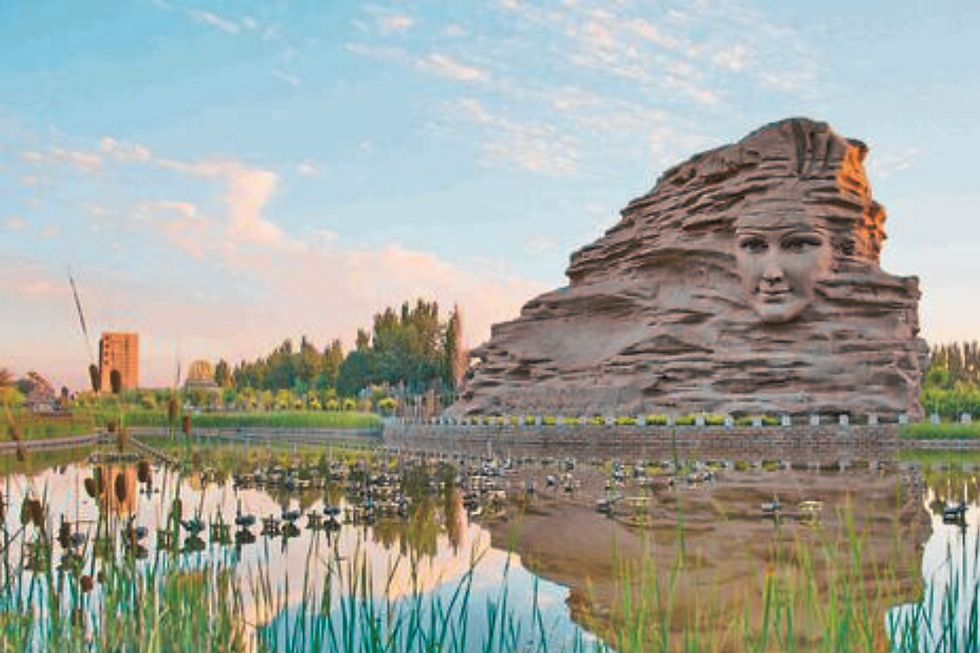
Loulan Cultural Park
A Loulan-themed park showcasing ancient sites like Loulan City, beacon towers, and burial grounds, offering an immersive cultural experience.
.png)
Loulan Museum
A Loulan museum showcasing artifacts from Loulan Ancient City, Milan Ruins, and Xiaohe Cemetery, highlighting the region’s history and culture.
.png)
Miran Fort
With 2,000+ years of history, gained fame in 1906 when explorer Aurel Stein discovered well-preserved winged angel murals. It stands as a key testament to Silk Road cultural exchange.
*Please prepare breakfast in advance due to tomorrow’s late train arrival.
Dinner/
Harembag Restaurant
Lunch/
Hotel
Lunch
Breakfast/
Chinese-style Breakfast
Train Cabin (2 guests per compartment)
Korla – Bosten Lake West Sea Fishing Village – Swan River – Korla
DAY
10
.png)
Korla
The “Pear City,” offers Mongolian Naadam and Uyghur Meshrep experiences, plus famous pears and lamb—making it a travel gem.
.png)
Bosten Lake West Sea Fishing Village
China’s largest inland freshwater lake, is rich in reeds and fish, making it Xinjiang’s top fisheries hub. It became a National 5A Tourist Attraction in 2014.

Swan River
Swan River Scenic Area, a 4A-level attraction in China, spans 10 km in Korla, connecting the Peacock, Swan, and Hongyan Rivers from Lixiang Lake to Shizi Bridge.
Dinner/
Hotel dinner
Lunch/
Hui-style cuisine
Breakfast/
X
Korla Hotel—
All Seasons Korla / Bosten Hotel / Bancheng Hotel / Xiyue Hotel
Korla – Luoburen Village – Tiemen Pass – Korla – (544 km) – Ürümqi
DAY
11
.png)
Luoburen Village
Formerly a major Lop settlement, the site is now a cultural tourism area with traditional architecture, set amid desert, the Tarim River, and poplar forests.
.png)
Tiemen Pass
A Silk Road chokepoint between two mountains by the Peacock River, Iron Gate Pass—established in the Jin Dynasty—is famed for its natural fortifications.
*Please prepare breakfast in advance due to tomorrow’s late train arrival.
Dinner/
Hotel Dinner
Lunch/
Hui-Style Specialty Meal
Breakfast/
Hotel Breakfast
Train Cabin (2 guests per compartment)
Ürümqi – International Grand Bazaar
DAY
12
.png)
International Grand Bazaar
Ürümqi’s largest ethnic market, with iconic Islamic architecture, showcasing Xinjiang’s diverse minority goods—a key cultural and commercial landmark.
*Full day at the International Grand Bazaar for shopping and souvenirs.
Dinner/
Xinjiang Farewell Banquet
Lunch/
X
Breakfast/
X
Ürümqi Hotels—
Ruihao / Yema International Business Hotel / Hantang / Xinda Hyde / Yilong International / Yinggang
Ürümqi✈Guangzhou
DAY
13
.png)
Morning: Arrive in Guangzhou and settle into a hotel near the Airport Economic Zone, offering convenient access to restaurants, shops, and entertainment.
Dinner/
X
Lunch/
In-flight Meal
Breakfast/
Hotel Breakfast
Guangzhou Baiyun Airport Transit Hotel
Guangzhou✈Taoyuan
DAY
14
.png)
After breakfast, transfer to the airport for flight back to Taiwan, marking the conclusion of this 14-day Southern Xinjiang Happiness Express train adventure.
Dinner/
X
Lunch/
In-flight Meal
Breakfast/
Hotel Breakfast
Home Sweet Home
Contact Us
Day 1
Taoyuan✈Zhengzhou✈Urumqi
Ürümqi
the capital of China's Xinjiang Uygur Autonomous Region, means "beautiful pasture."
It is the world's most inland major city and a key hub on the ancient Silk Road.
Home to Uygur, Han, Hui, Kazakh, and other ethnic groups,
it is known for its unique blend of cultures and history.
*Depart from Taoyuan International Airport with a connecting flight in Zhengzhou, arriving in Ürümqi. Transfer to the hotel upon arrival.

Lunch/ In-flight Meal
Dinner/ In-flight Meal
.png)
Grand Mercure Urumqi Hualing Hotel or similar
Day 2
Ürümqi – Xinjiang Ancient Ecological Park (Blood-Sweating Horse Base) 756KM – Kuqa
Xinjiang Ancient Ecological Park
Home to the world's largest Akhal-Teke horse base with daily shows, China’s largest petrified wood forest, ancient poplar displays, and meteorites.
Features cultural artifacts like stone statues, deer stones, and petroglyphs—showcasing Xinjiang’s natural and historical heritage in one immersive destination.
Kuqa
Located on the southern foothills of the central Tianshan Mountains, Kuqa—once the Kingdom of Kucha—is historically known as the “Land of Music and Dance.” Rich in oil and gas, it has a population of 490,000, mostly Uyghurs, with 230,000 in urban areas.
*Hotel day-use for refreshment. Transfer via exclusive Xiyu Happiness Express to Kuqa.
Breakfast/ Hotel Breakfast
Lunch/ Laghman Noodles
Dinner/ Welcome Banquet
Train Cabin (2 guests per compartment)
Day 3
Kuqa-Xayar Museum-Shaya Poplar Forest-Ta Qian City-Shaya
Xayar Museum
The museum features over 200 artifacts, including more than 30 rare treasures. Its highlight is the nationally protected Grade II relic, the large ceramic jar “Xue Xingjun Jianjun,” excavated in 1980 from Xiaoyang Dakxia Ancient City, Shaya County. The five exhibition halls cover Prehistoric Culture, Han to Five Dynasties, Song to Qing Dynasties, and Ethnic Customs & Intangible Cultural Heritage.
Shaya Poplar Forest
Located on the northern edge of the Taklamakan Desert, Shaya Poplar Forest spans nearly 2 million mu (≈132,500 ha). Xinjiang, known as the “Land of Poplars,” is home to this newly discovered virgin forest—one of the largest in the world.

Ta Qian City
Located north of Yingmaili Town, Shaya County, Ushikate Ancient City is one of Southern Xinjiang’s largest ancient city ruins. The Ta Qian City performance, “Seal of the Western Regions, Glory of the Silk Road,” features four main acts, including the Opening Ceremony, Return with Honor, Dreaming of Kucha, and a 5D Light & Shadow Show.
Breakfast/ Kuqa Ecological Park
Lunch/ Naan Pit Whole Grilled Fish
Dinner/ Hotel Dinner
Shaya
A key town on the ancient Silk Road and part of the Kingdom of Kuqa, has a rich history and cultural heritage. Eastern and Western civilizations—including Persian, Egyptian, Indian, and Chinese—converged here, blending local and traditional cultures into a unique tapestry.
Shaya Hotels—
Shaya Hotel / Yinqiao Hyatt / Jinsha International / Jintai Marriott / Honghua / Zhonghe
Day 4
Shaya – Tianshan Mysterious Grand Canyon – Kizilgaha Grottoes – Kuqa – (720 km) – Kashgar
Tianshan Mysterious Grand Canyon
In the Kiziliya Mountains (“Red Cliffs” in Uyghur), features breathtaking reddish-brown rock formations shaped by millions of years of wind and water erosion—comparable to the Grand Canyon in grandeur.
Breakfast: Hotel Breakfast
Lunch: Hui-Style Cuisine
Dinner: TraditionalChinese Cuisine
Kizilgaha Grottoes
The Kizilgaha Grottoes are ancient Buddhist caves of the Kingdom of Kucha and form an important part of the Kucha grotto system, alongside the Kizil, Kumtura, Simsim, and Ai Grottoes. The site contains 54 caves, 46 of which are numbered, spread across a cliff 170 meters wide (east–west) and 300 meters long (north–south). It is a significant Buddhist cultural heritage site along the Silk Road.
Train Cabin (2 guests per compartment)
Day 5
Kashgar-Kashgar Old Town【Opening Ceremony, East-West City Electric Cart Tour, City Photography Tour】
.png)
Kashgar
Located at the western terminus of the Northern, Central, and Southern Silk Road routes, Kashgar served as a pivotal crossroads of ancient Eurasian trade.
For centuries, it was a bustling hub and marketplace—aptly dubbed the “Kingdom of Bazaars”—where East and West converged both literally and culturally.
*Dinner on your own amid the vibrant street food stalls of Kashgar Old Town.
Breakfast/ Hotel Breakfast
Lunch/ Hotel Lunch
Dinner/ X
Kashgar Old Town
Kashgar Old Town is China’s only maze-like urban quarter built with a distinct Islamic cultural identity.
It vividly reflects centuries of Kashgar’s history—a condensed narrative of the ancient city itself. Within its narrow, labyrinthine alleys lie lively bazaars and artisan workshops, where commerce still thrives as it has for generations.
Kashgar Hotels—
Qiniwak International Hotel / Tianyuan International / Kashgar Hotel / Green Eastern
Day 6
Kashgar – Fragrant Concubine Garden – Id Kah Mosque – Kashgar Supermarket – (527 km) – Hotan
Fragrant Concubine Garden
Fragrant Concubine Garden's architecture fuses ethnic style with modern elements.
It tells the legendary story of Xiangfei through her homeland, residence, and life—from her birth in Kashgar to her honored life in Beijing.
Id Kah Mosque
The Id Kah Mosque is the largest in Xinjiang and one of the most influential mosques in Central Asia.
It serves as the main gathering site for Muslims across the region—daily prayers attract 2,000 to 3,000 worshippers. During major festivities like Eid al-Adha, devotees from all over Xinjiang flock here for all-night celebrations.
Breakfast/ Hotel Breakfast
Lunch/ Chinese Cuisine
Dinner/ Damei Xinjiang Restaurant
Kashgar Supermarket
Offering a wide range of Xinjiang specialties and Kashgar local products—from dried fruits, fragrant teas, and nuts to traditional snacks and gift items—all affordably priced and conveniently available.
Train Cabin (2 guests per compartment)
Rawak Stupa
A bowl-shaped Buddhist stupa, Rawak Stupa is the best-preserved example of Khotan Kingdom architecture, located within a 50 × 43 meter rectangular courtyard.
Day 7
Hotan – Rawak Stupa – Grape Corridor – King of Fig Trees – King of Walnuts Trees – Yotkan Ancient City – Hotan Night Market – Hotan

Grape Corridor
Built along farmland paths, the Thousand-Mile Grape Corridor stretches endlessly with lush, vibrant vines. Walking beneath the canopy of emerald grapes along rustic country paths, visitors are immersed in a picturesque, almost magical rural landscape.
King of Fig Trees
Over 500 years old, this fig tree stands 4 meters tall with a canopy covering 1.5 mu. Its twisting branches spread across the ground, resembling a dancing dragon.

King of Walnuts Trees
Planted around 644 AD, this 1,300-year-old walnut tree stands 16.7 meters tall with a 20.1-meter-wide canopy. Its “Y”-shaped trunk is partially hollow due to its age.
Yotkan Ancient City
Using the city as a live set, the show blends modern light effects with local culture, immersing visitors in the grandeur of the Silk Road through themes like Ban Chao’s expeditions and the Silk Princess.
.png)
Hotan Night Market
Covering 4,600 square meters, the market features a 272-meter-long enclosed hall with 260 neatly arranged stalls. Visitors can enjoy over 100 varieties of local delicacies, offering an impressively diverse culinary experience.
Breakfast/ Hotel Breakfast
Lunch/ Hotan Quanjude Restaurant
Dinner/ Hotel Dinner
Hotan Hotels—
Jiuhua Yulong / Xihua International / Yin Xing Hotel
Day 8
Hotan – Yotkan Ancient City – Tuancheng Fortress – Hotan – (846 km) – Ruoqiang
Yotkan Ancient City
Located 10 km west of Hotan in Bagqi Town, this immersive historical site features food streets, boutique hotels, artisan workshops, and cultural exhibitions. Through deep cultural storytelling and modern technology, it vividly recreates the bustling atmosphere of ancient Khotan during the Silk Road’s peak.
.png)
Tuancheng Fortress
This historic neighborhood in the city center showcases Uyghur architectural and cultural traditions. Its unique circular layout
—with streets radiating from a central core
—gives "Round City" its name.
As one of southern Xinjiang's most representative traditional districts, it remains a living testament to ethnic heritage and community life.
Breakfast/ Hotel Breakfast
Lunch/ Hotan Rose BBQ
Dinner/ Traditional Chinese Cuisine
Train Cabin (2 guests per compartment)
Hotan
A historic hub on the southern route of the ancient Silk Road, Hotan was renowned for its prosperity and trade.
It is famously known for the "Three Treasures of Hotan": Hotan Jade, Hotan Carpets, and Hotan Silk—luxurious goods that symbolized its cultural and economic richness.
Day 9
Ruoqiang – Loulan Cultural Park – Loulan Museum – Miran Fort – Ruoqiang – (426 km) – Korla
Ruoqiang
A historic Silk Road passage and strategic route connecting Central Asia, Xinjiang, and inland China. The region features diverse terrain, including the Tarim Basin, Tianshan, and Kunlun–Altun Mountains. In 2021, it was recognized for excellence in China’s National Village Cleanliness Campaign.
Loulan Cultural Park
A park dedicated to Loulan’s history and culture, featuring extensive natural and cultural resources. It includes ancient sites such as Loulan Ancient City, beacon towers, and burial grounds, offering visitors an in-depth experience of Loulan culture.
Loulan Museum
A museum in China focused on Loulan culture, combining excavation, preservation, and exhibition of artifacts. It highlights historical and cultural sites such as Loulan Ancient City, the Milan Ruins, and the Xiaohe Cemetery, serving as a key platform for exploring Loulan’s history and heritage.
*Please prepare breakfast in advance due to tomorrow’s late train arrival.
Breakfast / Chinese-style Breakfast
Lunch / Hotel Lunch
Dinner / Harembag Restaurant
Train Cabin (2 guests per compartment)
Miran Fort
With over 2,000 years of history, Miran Fort gained international attention in December 1906 when British explorer Aurel Stein discovered a well-preserved set of winged angel murals inside the corridor walls of an earthen Buddhist stupa. The city is renowned worldwide as a testament to East-West cultural exchange along the Silk Road.
Day 10
Korla – Bosten Lake West Sea Fishing Village – Swan River – Korla
Korla
Also known as “Pear City,” Korla combines Mongolian “Naadam” and Uyghur “Meshrep” cultural experiences. Whether riding across the grasslands or enjoying its famous fragrant pears and lamb, Korla is a true travel gem.
Bosten Lake West Sea Fishing Village
Bosten Lake is China’s largest inland freshwater lake. The surrounding area is rich with reeds, making it a key production base in China. The lake also produces a variety of freshwater fish, making it Xinjiang’s largest fisheries hub. In May 2014, Bosten Lake was designated a National 5A Tourist Attraction.
Breakfast/ X
Lunch/ Hui-style cuisine
Dinner/ Hotel dinner
Swan River
A China 4A-level tourist attraction, Swan River Scenic Area consists of the Peacock River, Swan River, and Hongyan River sections. It serves as an important waterway connecting the Peacock and Azalea Rivers. The scenic area stretches 10 km from Lixiang Lake in the south to Shizi Bridge in Korla city in the north.
Korla Hotel—
All Seasons Korla / Bosten Hotel / Bancheng Hotel / Xiyue Hotel
Day 11
Korla – Luoburen Village – Tiemen Pass – Korla – (544 km) – Ürümqi
Luoburen Village
Once a major historical settlement of the Lop people, the site has been developed into an expansive cultural tourism area featuring traditional architecture, including dwellings and ritual platforms. Set against a backdrop of desert, the Tarim River, and poplar forests, it offers visitors a blend of cultural heritage and natural scenery.
*Please prepare breakfast in advance due to tomorrow’s late train arrival.
Breakfast / Hotel Breakfast
Lunch / Hui-Style Specialty Meal
Dinner / Hotel Dinner
Train Cabin (2 guests per compartment)
Tiemen Pass
A key chokepoint on the Silk Road connecting northern and southern Xinjiang, located between two mountains beside the Peacock River. Established in the Jin Dynasty, its natural fortifications earned it the name “Iron Gate Pass.”
Day 12
Ürümqi – International Grand Bazaar
International Grand Bazaar
China's largest ethnic market, located in Ürümqi. Features iconic Islamic architecture and offers diverse traditional goods from Xinjiang's minority cultures.
A major cultural and commercial landmark.
*Full day at the International Grand Bazaar for shopping and souvenirs.
Dinner / Xinjiang Farewell Banquet
Ürümqi Hotels—
Ruihao / Yema International Business Hotel / Hantang / Xinda Hyde / Yilong International / Yinggang
Day 13
Ürümqi✈Guangzhou
Morning: Fly to Guangzhou and check in at a conveniently located hotel near the Airport Economic Zone with easy access to dining, shopping, and entertainment.
Breakfast/ Hotel Breakfast
Lunch/ In-flight Meal
Guangzhou Baiyun Airport Transit Hotel
Day 14
Guangzhou✈Taoyuan
After breakfast this morning, transfer to the airport and board your flight back to Taiwan, concluding the 14-day Southern Xinjiang Happiness Express train journey.
Breakfast/ Hotel Breakfast
Lunch/ In-flight Meal
Home Sweet Home